“Honey, we need to talk.” Feedback for professional women
Why professional women and women need feedback but have different styles
Both men and women want to be understood, but there is no doubt that differences in communication styles impact the workplace feedback process. As more and more women climb the corporate ranks and men continue to dominate the upper echelons of the organisational structure, it’s becoming increasing important not just to acknowledge those differences, but to address them too.
Women are said to talk twice as much as men. It is claimed they speak 20000 words per day compared to more than 50% less from the men in our personal and professional lives. Although that stat is in dispute. For us, life is a story not a sentence. We enjoy the rich tapestry of subtext and background that joins all the dots. In most of our relationships, we prefer to have an on going dialogue which gives us a greater understanding into what is going on. It allows us to anchor ourselves more firmly. With this perhaps we achieve a greater sense of security.
Women like to be kept in the picture. All of it. But not all women are like this.

DIFFERENCES IN COMMUNICATION STYLE
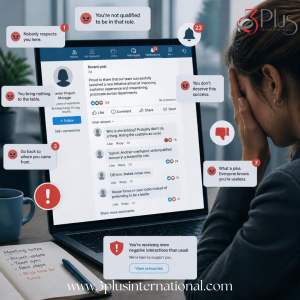
We have read John Gray’s “Men are from Mars Women are from Venus.” It tells us that women use more words to make a point and express more feelings. Our conversations help us work through problems to find a solution. We try to give feedback tactfully to the point of very often asking permission to do so. We know that men think through problems and only verbalise the solutions. If we receive direct feedback we are more inclined to take it personally and although we try hard not to, we still do. Even though we’ve been to workshops about crying in the office, our greatest dread is our voices trembling spontaneously and welling up in tears. Meeting rolled eyes, we are then accused of being emotional. Next stop, the bathroom.
It takes confidence to improve communication at work. 3Plus Returner Roll-Up Session on Building Your Confidence can help you.
HE SAYS, SHE SAYS
So it’s hardly surprising that from a male perspective oftentimes the requests for feedback from female reports gives them palpitations. It is the professional equivalent of the “Honey, we need to talk” line. They hear it from their wives, girlfriends and mothers and it sends them headed for the golf course or scrambling for the remote. But there is no need for feedback for professional women to become a big deal.
However, research suggests that regular feedback is vital to performance. It is particularly important as an early warning system for any developing critical issues. The number of women in senior roles remains resolutely lower than their male counterparts. This means understanding the gender feedback gap is important to all organisations to maximise performance.
Sally is a Senior Manager in an international company. She is preparing for her annual appraisal interview with her immediate manager. It is a complex 360° 12 person review of her performance. One of her goals for the upcoming year and an agenda item, is to manage and align their communication expectations. She feels that she is operating in a feedback vacuum. He believes that he only needs to communicate when something is wrong. So for him, no conversation = no problem. He wanted to arrange her annual review in a hotel lobby. She wants to have a formal discussion in a meeting room. Instantly there is a disconnect.
He possibly feels hounded.
She feels un-validated and not taken seriously as a professional
DIFFERENCE IN COMMUNICATION MOTIVATION
Deborah Tannen, Professor of Linguistics at Georgetown University, author of “You Just Don’t Understand,” suggests that “men want to report, women want rapport”. She maintains that the difference in focus, is the root of miscommunication: “Women communicate to build relationships and feel connected. Men communicate to give information, solve problems and show expertise and superiority.” This is something women also apologise for. Men, she maintains, want to give information while remaining independent.
To achieve a fully-functional, balanced workplace, that maximises and blends gender difference, it is therefore necessary to understand those differences. Communication styles can become divergent. Don’t dismiss or judge them, or worse still ignore them.
Be aware of varying styles of communication
Kristi Hedges, leadership coach, speaker and author of Power of Presence: Unlock Your Potential to Influence and Engage Others recommends women becomes more spontaneous in their requests for feedback. Emulate the male model, by dropping by the boss’s office, or perhaps agreeing to a performance appraisal in a hotel lobby. The danger in favouring one style of communication at the expense of another, means that both men and women lose out. Sally would argue her boss is never in his office, hence the need to go to a hotel!
Neither style is right or wrong. They are simply different. As we become aware that the communication styles of men and women can be on a spectrum then it’s important to be able to be flexible and give feedback to meet the needs of the individual and it might require a gender angle.
What is paramount, is an increased awareness of the nature of these communication differences and then working with them for the benefit of all.
Giving and receiving constructive feedback is a trainable skill. So is managing communication expectations. For any organisation looking for support to navigate this workplace minefield I suggest you check out 3Plus Corporate programs, to avoid the situation that Sally and her manager are currently encountering.