It’s time to stop being passive and start intervening
Organisations want to foster cultures of inclusion, but frequently overlook they need to both encourage and train employees on how to deal with toxic or inappropriate workplace behaviours themselves. It’s not enough to just hope they will speak up and know instictively how they should stage an effective bystander intervention as soon as they see one . Many companies encourage the idea, but don’t actually tell people how to go about it so it ends well. This miscommunication results in confusion and sometimes botched efforts.
Bystander interventions help reduce the level of microaggressions, gender and other biases and sexism, to create a new normal when these types of incidents will be considered unacceptable and indefensible. They are particularly impacful when they come from peers.
Create a culture of awareness
One of the most important elements for any organisation wanting to foster a culture of inclusion is to create awareness how bystander inetrventions can actually help. Research has indicated that women can be more reluctant to speak up with a bystander intervention for fear of repercussions, mainly to to their job security. This is especially true if those involved are senior and male and in positions of authority.
This means that a bystander intervention can be an initiative which is a gap that male colleagues are being counted on to fulfil and to step into their roles as male allies .
Every day microaggressions
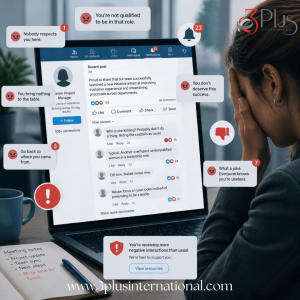
Individuals in minority groups and women are regularly demeaned and harassed in the workplace on an ongoing basis, every day and sometimes they are almost imperceptible. Cumulatuively over time, these “cuts” serve to create toxic and non-inclusive workplaces. This can leads to a reduction in employee engagement and ultimately higher levels of employee attrition. One way employers can stop or curb this behaviour is making bystander intervention training a priority, because failure to do so ultimately damages their bottom line and employer brand.
In this post we are focusing now on issues requiring bystander intervention that are verbal or procedural, rather than physical or potentially dangerous which tends to happen more in public places. Clearly if a person is in physical danger even in the workplace, then an alarm should be sounded for support, calling the relevant authorities, as well as doing what is practical at the time.
Check out the 3Plus Resource Hub on Sexism and Sexual Harassment
De-normalizing deviancy
One of the major steps is recognising that something inappropriate is actually taking place, which in istelf self can be a challenge. Many of these damaging incidents going on around us are so commonplace, they have become embedded into our cultures, and we simply fail to notice. Giving all employees unconscious bias training is a step in the right direction, so as a bare minimum staff understand what behaviours and comments contravene their colleagues fundamental right to respect and dignity in their place of work.
Two steps to stage a bystander intervention:
In 3Plus training programmes, we use the CIA Methodology designed by Dorothy Dalton – establishing context, then establishing intention, then agreeing to act. It’s thsi last part which frequently gets ignored.
- I noticed in the weekly meeting (this happened)
- When that happens I (state MY feeling/ reaction)
- Can we agree that it won’t happen again….
There are two opportunities to initiate a bystander intervention:

#1 At the time – Call Out
It’s important to flag the issue up as one that is important to you, rather than on behalf of a potentially injured party. Otherwise you put the individual in the position of weakness again and cast them as a victim for the second time, what we call at 3Plus” re-victimisation”.
“Let’s keep the meeting professional and cut out inappropriate comments / jokes etc. We should talk about this later.”
#2 Later – Call out
Speak to the party concerned at a later time, and if the situation warrants it to someone senior to inform them of the incident. This might be an HR person or a manager.
Specify your reasons for feeling uncomfortable or offended and suggest that some sort of policy be implemented.
- To a peer: “John, as your colleague when you make sexist comments in the office I feel extremely uncomfortable and would like you to stop. It creates a bad working atmosphere for the team and impacts our performance.”
- To a senior person: “We seem to accept inappropriate, sexist remarks in the department. They make me personally uncomfortable and create tension on the team. I have spoken to the individual(s) involved, but think we should have a transparent and public policy of zero tolerance. What can you do to support that initiative?”
The more we are all willing to initiate a bystander intervention, the greater the impact on the broader workplace culture when the act of calling out inappropriate behaviour is called out and normalised. Sexism, bias and discrimination will be easier to manage and therefore reduced. Setting “team charters” is a good collaborative way to go about establishing agreed red lines – sometimes with warning words such as “ouch,” “pause,” or “timeout” for example to indicate when a boundary has been crosssed.
We are also starting to see statuatory obligations for third-party accountability, so it’s in everyone’s interest to make sure that our workplaces are inclusive, safe and secure.
Overview

Contact 3Plus for training on preventing every type of harassment in your workplace and training employees how stage a constructive bystander intervention in their place of work.
Originally published in 2017 and updated October 2026