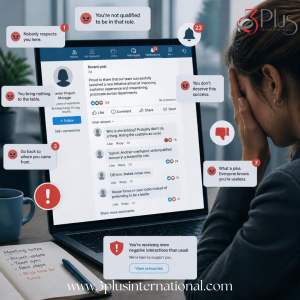
Women have to speak up to express their needs in all situations
Otherwise this passive acceptance of what is unacceptable seeps into the workplace
Mismatched expectations
In the opening lines of Pride and Prejudice, Jane Austen said “It is a truth universally acknowledged, that a single man in possession of a good fortune, must be in want of a wife” In the 21st century that truth would no longer resonate. And nowhere was it more evident as I read the article about the dating experience of a woman called Grace published last weekend, in the hitherto little known online magazine Babe.net.
Austen’s words played in my head together with a David Attenborough sotto voce soundtrack. His commentary would have talked us through blow-by-blow the “mismatched gender expectations in human courtship and mating rituals.” The post recounts (in more detail than I would ever care to hear about) the evening “Grace” (a pseudonym,) spent in the company of award-winning actor and comedian, Aziz Ansari. What it showcased for me is why women have to speak up and why today it’s more important than ever.
Taking in all sources
I’ve also read the back and for from every pundit under the sun ( What can I tell you…I’m recovering from surgery) re-hashing the issue from all angles: male and female, gay vs straight, Gen Y vs the rest, about what constitutes consent and who should be responsible for what. The whole debate highlights a massive amount of confusion around aforesaid “gender expectations in human courtship and mating rituals.” These are of interest to me in the sense that wider cultural gender miscommunication and the lack of agency for women, ultimately seep into and are replicated in the workplace.
Boomer view
For someone of my generation, Grace’s story is loaded with gender-coded expectations which sadly put her in a position of helplessness and docility. For a woman to find herself naked on a kitchen counter, engaging in an intimate act without having been clubbed on the head with the pepper grinder, is perhaps best left as one of life’s mysteries.
Gen Y connections talk to me about multi-layered nuances that exist for them today around consent. Sometimes there is no replacement for cross-generational common sense. When Grace changed her mind about the direction the encounter was taking, the talk about non-verbal cues going unheeded also leaves us confused.
Whoopi Goldberg captured this perfectly, suggesting there was other body language she could have employed, involving her knee. Grace recounted numerous mini-Groundhog moments, hoping it would seem, that repeating her behaviour would bring different results, possibly some fairy tale type ending. We don’t know what her expectations were.
Missed messages
Much has been made of the dating faux pas made by Ansari. But “Grace” also ignored his non-verbal cues. Mr. Attenborough would have identified these with the same objectivity as he as he might have done when describing the mating rituals of a greater bird of paradise or a hedgehog. Not offering Grace a choice of wine at his home, rushing the meal and paying the bill before she was done was the first red flag. Then jumping her on the kitchen counter in a way that was not to her liking, while persuading her to get naked and intimate was the second. She could have avoided the “worst night” of her 22-year-old life.
Greg Behrendt in his book “He’s just not that into you” said:
“If he creates expectations for you, and then doesn’t follow through on little things, he will do same for big things.
Non-verbal communication is not enough
She was hoping for a relationship and romance he was looking for…. something else altogether. Probably not a wife.

The #MeToo movement has produced a tsunami of exposés as high numbers of powerful men are outed for rape and sexual harassment. An abuse of power has been recorded and found to be which more widespread than some ever imagined. Women probably knew differently. Others have been for outed for being generally sleazy, slimy and predatory.
There is no doubt that this behaviour reflects a cultural imbalance of power heavily weighted in favour of men. Women are considered “fair game” to be objectified and pursued in whatever way men feel they wish. This can be on the street, in the workplace or socially. It shouldn’t happen.
Want to learn more about the unconscious biases that drive gender coded expectations – find out about our workshops.
Women have to speak up
These discussions open up disconnects in today’s dating rituals and other interactions between men and women which often assign gender roles and expectations. Men are expected to pursue women and this persistence should be received as flattering and part of the mating game. “The lady doth protest too much me thinks” said Shakespeare in Hamlet, Act III, scene II.
Men are seen, and encouraged to be sexually assertive and initiators (although not always) of any engagement. A swipe right is all it takes to engage with someone, but women are also participating in these exchanges. This should not be as acquiescent mindless bodies that exist for male gratification.
In the workplace this passivity appears as waiting for professional recognition, a need to be liked, a fear of hurting people’s feelings or avoiding confrontation or maintaining harmony. Women have historically been only partially protected in the dating game by social etiquette, but when this disappears women have to speak up at the time.
Personal responsibility
They should always be prepared to take responsibility for themselves, when others behave irresponsibly or incorrectly whether in their relationships or in the workplace. They then have to take any necessary action and shouldn’t rely on others doing the right thing (as they see it) to take care of them. Oftentimes they won’t.
First encounters can be difficult and finding the best way to communicate preferences is not always clear. A woman who drinks white wine when she wants red, and leaves a restaurant when she is not ready, but did not actually say so is setting a scene. She will certainly have difficulty indicating her sexual preferences about what turns her on and where her limits are. Paying her share of the bill will help shift that dynamic too.
Personal responsibility
But women cannot participate equally in life, unless we start to communicate our needs and preferences clearly, so there is no doubt. This has to be done everywhere. Then we have to follow through if things are not going to expectation, whether in the workplace, restaurant, bedroom or on the kitchen counter.
We have to be willing to speak up, deal with the issue constructively, and depending on the circumstances, walk away. Grace participated, but did not leave or communicate in a way that her message was received and acted upon. She didn’t even order her own Uber. Come on.

And while we have to hold men accountable for crass, misogynistic, unempathetic behaviour and the range of sexually abusive behaviours it shouldn’t be at the expense of women speaking out. The two campaigns should be simultaneous, otherwise we are turning the clock back. If a woman can’t find her voice on a date, where there is no power relationship or coercion either tacitly or physically, how will they find it in their careers? Remaining silent or giving off mixed messages fuels the confusion which undermines women.
Although the 50 Shades series was lambasted by some feminists, Christian Grey’s intentions were clear: there was a contract agreeing the interaction specifying hard limits and safe words were identified when any activity should stop. Is this what we really want and need?
The subtext and why women have to speak up
There was lots of discussion around this that if Ansari had been the guy next door and hadn’t been famous, would it have become such a big issue?
There are many reasons why women have to speak up and why they don’t at the time. Fear of repercussions is a primary motivator, maybe even trauma in the moment.
Scarlett Johansson said at the Women’s March this weekend “Gender equality can’t just exist outside ourselves, it must exist within. We must take responsibility, not just for our actions, but for ourselves.” Women HAVE to speak up for themselves.
If your organisation needs advice around sexual harassment contact 3Plus NOW