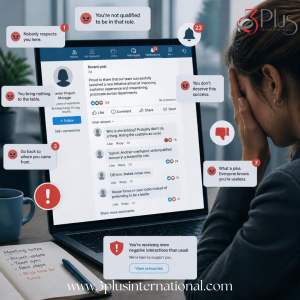
The landscape around moral injury has changed and is going to have a significant impact on organisations that condone or ignore unethical behaviour.
I first noticed indications of workplace trauma before COVID. It was what prompted me to certify as a Trauma Informed Coach and I have been writing and talking about the topic for several years. When I mentioned to clients that transgressive behaviours, which in some case have been normalised in our workplaces can cause trauma, they looked at me in disbelief. But above all they were reluctant to recognise these situations as something that happened in their workplaces.
They mistook silence for safety.
However, all that changed last week.
Moral Injury DSM Classifiation
On September 2025, the American Psychiatric Association expanded the DSM-5-TR category “Religious or Spiritual Problem” to “Moral, Religious, or Spiritual Problem” (Z65.8). The change explicitly recognises moral problems as experiences that can be a focus of clinical attention, including experiences that disrupt a person’s understanding of right and wrong or their sense of goodness in themselves, others or institutions.
Their definition (drawing on research led by the Human Flourishing Program at Harvard) says moral injury happens when someone’s moral beliefs are violated, whether by their own actions, or by what they witness or are forced to do. mportantly, moral injury has not become a standalone psychiatric diagnosis. Rather, its inclusion within this DSM-5-TR category provides formal recognition that moral distress and moral injury can be clinically significant without themselves being classified as mental disorders
Research on moral injury describes it as psychological and existential distress associated with experiences of wrongdoing, including situations in which people perpetrate, witness, fail to prevent, or feel betrayed by serious violations of deeply held moral values.
What Does Moral Injury Look Like in a Corporate Setting?
In a corporate context, moral injury can happen when people are pressured to act in ways that go against their values, or when they report unethical behaviour and are punished instead. Or they are impacted by unethical behaviour of others.
Here are some examples:
1. Being asked to do something unethical
Suppose you work in sales, and your boss asks you to exaggerate product capabilities, or hide risks, to close deals. You know it’s dishonest, but if refusing could cost you your job, you suffer inner conflict.
Or in finance, being pressured to overlook accounting shortcuts to meet targets, even though you know that’s wrong.
2. Witnessing wrongdoing and being silenced
You see a colleague being discriminated against, or improper safety shortcuts being taken. You raise the issue with your manager, but instead of action, you’re told to drop it, or quietly sidelined.
Or you are punished (such as passed over for promotion, excluded, or given lower level work) for reporting misconduct (whistle blowing), even though what you reported was valid.
When the institution doubles down minimisation, shifting blame, and using DARVO tactics to implicate the target, all serve to amplify the moral injury or trauma.
3. Company policies or decisions that violate your moral code
A company decides to cut costs by cutting corners on safety regulations putting people’s health is at risk and you are then asked to enforce the policy.
Or leadership mandates practices (e.g. very aggressive performance targets, overly competitive metrics) that force people to choose profit over honesty, safety, or well-being
4. Covering and Code Switching
Marginalised or under-represented groups are constantly under pressure to suppress parts of their identity to fit into a dominant group where covering, code-switching, or adapting their identity for acceptance, or even to protect themselves. This requires ongoing vigilance and self-monitoring that keeps individuals in a prolonged state of psychological strain or hyper-arousal/hypo-arousal..
Under sustained pressure, people are more likely to operate in “survival mode,” where maintaining safety or belonging takes precedence over authenticity or ethical clarity. This can mean complying with practices that conflict with personal values or suppressing key parts of one’s identity just to function in the environment.
Symptoms of Moral Injury for Perpetrators
Below are situations that can cause moral injury and what to look out for in your workplace.
For either perpetrators, bystanders or targets who frequently experience these conditions because they would be financially exposed or their careers damaged, it results in:
Persistent guilt, shame, or regret (for what they did, did not do, or felt forced to do).
Anger or betrayal toward leadership, colleagues, or the company itself.
Loss of trust in the institution, or seeing it as morally compromised.
Feeling alienated, isolated, or withdrawing from work or people.
This results in Allostatic Overload which reflects the cumulative strain on the body and mind from chronic stress, reducing cognitive capacity, emotional regulation, and decision-making over time.
Sometimes we don’t recognise or admit that these toxic or unethical practices are going on around us, (betrayal blindness) because our survival depends on staying in the institution or maintaining hope in leadership. This can lead to the normalisation of toxic practices which become embedded into the workplace culture.
Symptoms of Moral Injury for Targets / Victims
As I outlined in my Substack post “Betrayal Trauma and Psychological Safety” the impact on individuals of any moral injury whether cause by institutional or relationship betrayal are significant. The more someone depends on the institution, for safety, identity, financial security, the more harmful it is when betrayal occurs and the more painful it is for the individual.
Psychological & physical health decline: Betrayal or any kind of moral injury is linked to increased anxiety, depression, and somatic symptoms (e.g. physical ailments with no clear medical cause) in people who experience harassment or other violations and then face institutional betrayal.
Job satisfaction and retention suffer: Employees who report institutional betrayal often have lower job satisfaction, less commitment to the organisation, and greater retention risk.
Trust and organisational culture are eroded: Once employees feel betrayed, trust in leadership, and in colleagues, drops. Organisational norms slide and safe spaces for vulnerability or dissent are shut down.
Employee performance, innovation, creativity decline: When people fear being invalidated, dismissed, or blamed for speaking up, they stop taking risks. They hesitate to take initiative. Mental load increases (worry, hypervigilance), leaving less focus for creative work.
Healing moral injury is both personal and systemic.
Trauma informed grievance systems: Organisations need totrain HR and line managers to practice trauma reflective listening, when they process grievances. Very often the action of reporting an issue can be as traumatising as the original incident or problem.
Institutional courage: Where organisations proactively act with transparency, accountability, repair harms and have systems in place to mitigate against psychosocial risk, this can help buffer the negative outcomes associated with institutional or relationship betrayal.
Psychological safety: Creating environments where employees feel safe speaking up without fear of retaliation or judgement. Leaders need to model humility, openness, encourage dissent, not punish it.
Clear policies and accountability: Commitments to fairness, anti-harassment, non-reprisal for whistle blowing, consistent response when commitments are broken. Perpetrators have to be visibly held to account.
Support and repair for individuals: Access to trauma-informed counselling or coaching, peer support, validation. Part of healing is acknowledging how deeply someone was hurt.
Audit organsiations for psychosocial safety: Watch for signs of moral injury: rising disengagement, reports of bullying, anxiety or depression. Look out for hotspots which show anomalies for attrition, illness, absenteesim and make inquires. Make changes in policies or practices that create moral strain.
Mainstream condition
Moral injury is no longer a fringe idea. With this DSM recognition, it’s clear: when people are put in situations where they must violate their morals or are punished for speaking out, the damage is real. In corporate settings, companies that ignore this risk lose not only trust and morale, but possibly performance and reputation too.
If you ever feel stuck between what’s right and what you’re asked to do, know that’s serious, and you are not alone. It’s not just about making tough choices: it’s about protecting values, integrity, and your mental health.
👇👇👇👇
The DSM recognition of moral injury is a wake-up call: workplace harm isn’t hypothetical, it’s happening, and its impact on people and organisations is profound. Silence is no longer safety.
Could organisational decisions be creating moral injury? Talk to us about identifying and reducing psychosocial risk.
Dorothy Dalton is Founder of 3Plus International a specialist HR consulting organisation focusing on designing inclusive workplaces. She supports organizations to achieve business success and individuals to reach their potential. She is CIPD qualified, a Certified Trainer and multi-disciplinary Coach, including Trauma Informed Practices. She is a Certified ISO 45003 Practitioner (Psychosocial Safety)
AI regulation, recruitment bias, and the challenging question of whether financial penalties will change corporate behaviour. The EU AI Act is supposed to make artificial intelligence safer, more transparent and more accountable, and I have great faith in it although
What our 2026 Career Strategy & Planning Survey tells us about confidence, barriers, and the questions we still need to ask When we launched the 3Plus International Career Strategy & Planning Survey, we wanted to understand how people approach their
What Five Transparency Reports Reveal LinkedIn presents itself as a professional networking platform, yet many members especially women report being subjected to sexual ahrassment and bullying. How well does it protect users from these behaviours, and how consistently does it