Why relationship fluency is important in the workplace
Relationship fluency is an aspect of life that most of us think is important at home. But as our workplaces are built on relationships, maybe we should consider relationship fluency in all parts of life. Esther Perel explains why.
Esther Perel is a leading relationship therapist, author and world renown keynote speaker who offers compelling insights into modern relationships. I saw her speak in Brussels a few years ago. She was discussing broken hearts, fidelity (or lack of) and moving forward with relationships after betrayal. I was impressed, and more than a little surprised, at just how many stood up to speak. They publicly shared very intimate information about their love and sex lives with a group of total strangers.
I was even more intrigued to understand how that could be applied to the workplace when I heard she was speaking at Unleash Amsterdam. Would she be asking a group of HR practitioners to share their experience of heartache and betrayal I wondered?

Perel is the author of the bestselling books Mating in Captivity and The State of Affairs. She also has a successful couple’s therapy practise in New York. Her basic premise makes sense. Today’s workplaces are built on relationships, whether with reports, co-workers, customers or any other stakeholders. Effective relationships grease the wheels of any organisation and make them function successfully. Highly performing organisations are more profitable. Poor relationships can create a toxic corporate culture, where employees feel psychologically insecure with significant fall out. This can include absenteeism, mental health problems, increased errors and reduced creativity. These are all factors which impact employee engagement, ultimately hitting productivity and therefore profitability.
Loss of trust
Technology has given us more freedom than ever, both professionally and personally. But it has also resulted in feelings of isolation and anxiety. Loneliness is public health crisis No. I, Perel believes. She adds another dimension to the definition of loneliness: “experiencing a loss of trust and a loss of capital” rather than feeling socially isolated. This tends to happen at home in primary relationships. It could be with partners who are more interested in their smart phones than the person next to them. But it is equally possible in the workplace.
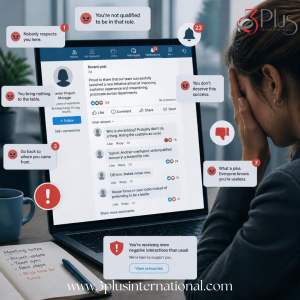
There is no doubt that workplace relationships are as prone to jealousy and bitterness as personal ones, with all the corresponding negative behaviour and reactions. Many of us have seen this in our daily work lives. As we might have done in a private relationship, we see: raging, power playing, ghosting, betrayal, jealousy or withholding. Who hasn’t felt stabbed in the back by a colleague, disappointed by a boss who plays favourites, betrayed by a report or overwhelmed by an angry customer? Who has ever wondered if a co-worker is plotting to undermine us? Or tried to protect their team from an external and possibly Machiavellian power player?
Secure but independent
As a coach I work with many individuals who experience career setbacks, or who are unhappy in the professional lives. Mobbing, bullying, incivility, disrespectful behaviour, sexism, harassment and discrimination are widespread. A common denominator in a typically toxic workplace culture is a lack of inclusion, respect and trust. Research from Google’s Project Aristotle suggests that feeling psychologically secure is the leading ingredient to building an effective team. Here empathy, trust, dependability and the possibility for every team member to be authentic, plays a driving role. These are same qualities Perel maintains that we look for in a personal relationship, combined with sometimes contradictory desires to feel secure but independent.
For the first time emotions, which were once the scourge of the workplace, are being linked to enhanced professional performance. Perel connects this to our driving need to belong and a new generation which has different expectations for all relationships. She talks about trust, authenticity, belonging and self-actualisation. “It is the quality of our relationships that will determine the quality of our lives”.
Relationship fluency as a vital skill
She believes “relationship fluency” is critical to business success and how we relate to one another is key to the bottom line. Today the traditional concepts of loyalty and fidelity within our primary relationships are being re-configured. As such, we are seeing a new approach to loyalty and engagement for organisations. Relationship fluency will be a vital soft skill. This will provide challenges as both sides navigate potentially mismatched expectations around fidelity, loyalty, security and freedom.
In a time of rapid AI advancement, relationship fluency, that ability to successfully navigate human emotions, build trust, and communicate with empathy, will be more critical than ever. As machines take on more technical tasks, our uniquely human capacity to connect becomes a key differentiator. Relationship fluency not only strengthens collaboration and creativity but also ensures that technology serves people ethically and meaningfully.
In a world increasingly shaped by algorithms, it’s our relational intelligence that keeps us grounded, humane, and truly innovative.
If your organisation wants to enhance soft skills on your teams – get in touch!