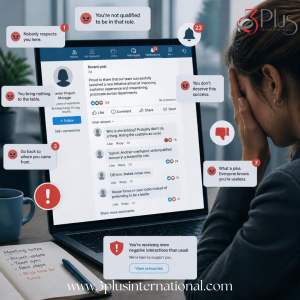
Successful women are not lucky
Successful women are not lucky. Viewing a woman’s success as being down to luck is deeply embedded in sexist norms and gender stereotyping.
Ability or luck: A systematic review of interpersonal attributions of success from L.S.E’s The Inclusion Initiative published research last month reported that when women and people of colour are successful, that success is frequently attributed to “luck” not “talent.”
Fast forward one month and a close friend, an award-winning scientist in the top percentile in her field, won yet another accolade. In a public announcement for IWD, her organisation recognised her achievement as being “one of the lucky ones” to receive this award.
And of course they call it “Lady Luck” not “Man Luck.”
No. She is a sucessful, talented, competent, committed professional.
Luck vs Talent
There are a number of reasons why we view a woman’s success as being down to luck. It is basically part of deeply embedded sexist norms and gender stereotyping.
- We see women as being less competent and ambitious than men. When women are successful it can be perceived as a fluke or stroke of luck, rather than the result of talent and dedication.
- Women face more barriers than their male counterparts. Overcoming these obstacles requires dedication, resilience, and talent. By saying how lucky they are, is easier than acknowledging how the system is set up to work against them
Successful women are not lucky. They will be many things: talented, capable, competent, committed, dedicated, compassionate, and humble. Let’s start to expand our vocabulary when we describe women but also describe ourselves.

Download FREE Power Words
Self-sabotage
Anyone who works on career development or job search with women knows how many struggle to own and articulate their accomplishments. Many women will say how “lucky” they are to have had a good team / or boss / or were in the right place at the right time. “I didn’t do it on my own” they say.
I agree there is no “I” in team. But there is an “I” in both “fire” and “hire”
Women also have to stop viewing themselves as lucky and say they worked hard for whatever they achieved. Here they are trapped by their own self-limiting beliefs and the double-gender bind of being trained to be likable. Research in leadership development shows that there are many double standards that accelerate the success of men, but block the advancement of women.
Stop being lucky
All research suggests that when we think of leaders we think of men. This is also from women and children. The characteristics used to describe leaders are assertive, dynamic, strong, competitive, creative, and winning. These traits when applied to a woman become negative: aggressive, pushy, bossy, narcissistic, selfish, and crazy.
Worth a read: Actionable feedback – why language matters – 3 Plus International
We have to work to overcome these stereotypes. Here are three tips to STOP being lucky:
1. Have a career strategy
Research from 3Plus in 2019 found that only 50% of women have a career strategy compared to 85% of their male counterparts. This is a significant increase from 5% in 2014. Don’t wait for opportunities to find you. Put your career stake in the ground and make conscious choices around the opportunities you are looking for. Share your ambitions with your boss and even your partner. It’s OK to be ambitious.
Worth a read: 3 career conversations for 2022 – 3 Plus International

2. Network effectively
Having a networking strategy goes hand in hand with having a career strategy. Understand what action you need to take to get you where you want to be and make sure you connect with the right people to get you there. Find mentors and sponsors to support you on your journey and build your Personal Board of Directors to support you. Find your male allies and work with other women so you can support each other.
3. Be familiar with gender stereotypes and expectations
Knowing where gender bias kicks in on your career path will allow you to call it out. Many women are still reluctant to acknowledge that gender bias is real and pervasive. If they think they haven’t experienced it, it’s because they haven’t been paying attention.
Suggesting that women are “lucky” rather than capable, is a sexist trope that diminishes their skills, talent, hard work, and dedication. If it happens to you – speak up and certainly never describe yourself as being “lucky.”
There is a saying you make your own luck, perhaps you have a talent for luck, but maybe it’s time to be down on your luck, and up on your talent.
Make sure the women in your organisation are down on their luck and up on their talent. Contact 3Plus NOW